If you live with ADHD, you are likely intimately familiar with the "loud brain" phenomenon. It isn't just about being busy or having a heavy workload; it’s a specific, visceral sensation where your internal monologue sounds like a radio tuned between stations, crackling with static, commentary, and half-finished thoughts. When you add stress to that equation, the volume doesn't just go up—it feels like the speakers are about to blow.
After 11 years of editing wellness features and interviewing clinicians across the UK, I’ve heard this described in a dozen different ways. But the most important question isn't the clinical definition of the symptom. It’s this: What does this actually look like on a Tuesday at 3pm?

It looks like three tabs open, two of which have nothing to do with the work in front of you. It’s the cursor blinking at the top of a blank document while you replay a perceived slight from a morning meeting. It’s the physical sensation of skin hunger or sensory overload because your office chair feels too scratchy or the hum of the fluorescent lights has suddenly become an aggressive intrusion. https://highstylife.com/beyond-the-superpower-myth-is-adhd-non-linear-thinking-actually-an-asset-at-work/ This is where stress and ADHD collide, creating a perfect storm of overstimulation.
ADHD as a Cognitive Style, Not Just a Deficit
Too often, we talk about ADHD exclusively through the lens of a "deficit"—a lack of focus, a lack of organisation, a lack of discipline. This is both medically reductive and frankly, quite boring. From a neuro-biological perspective, the ADHD brain is a high-speed engine with bicycle brakes. It’s not "broken"; it’s a different cognitive style.
People with ADHD are often exceptional at divergent thinking—the ability to generate multiple solutions to a single problem by connecting disparate dots that most people don't even see. When you aren't stressed, your brain is a wide-angle lens, taking in the full breadth of a project. However, the trade-off for this breadth is a struggle with the "executive function" necessary to filter the noise. When stress enters the picture, that filter—which is already working hard—simply gives up. You aren't losing your intelligence; you are experiencing a temporary collapse of your executive processing bandwidth.
The Physiology of Overstimulation
When you are stressed, your nervous system releases cortisol and adrenaline. In a neurotypical brain, this might provide the necessary "edge" to power through a deadline. In an ADHD brain, which is often already operating at a higher baseline of sympathetic nervous system activation, this extra spike is like throwing petrol on a bonfire.
Ask yourself this: overstimulation isn’t just a feeling; it’s a physical state. Your heart rate increases, your peripheral vision might narrow, and your ability to prioritise tasks drops off a cliff. This is why, when a deadline approaches, you don't suddenly find "discipline." Instead, you find yourself alphabetising your email inbox or researching the history of the stapler. This isn't laziness—it's your brain attempting to self-regulate by seeking a "dopamine hit" that is easier to achieve than the daunting task at hand.
The Reality Check: The Tuesday 3pm Trap
Let’s ground this. It’s Tuesday at 3pm. You have a deadline at 5pm. You are mid-flow, but a notification pings on your laptop. Because your brain is already scattered from the baseline stress of the day, that one ping pulls you out of your deep work, and you can’t get back in. You have effectively lost 20 minutes of productivity trying to re-orient yourself. This is the hallmark of focus problems in an ADHD-stressed state.
Stage ADHD Brain State Effective Management Tool Baseline Engaged, creative, associative Body doubling, structured breaks Early Stress "Radio static" begins Sensory reduction (noise cancelling) Overstimulation Executive function paralysis Step away, physiological resetNavigating the Treatment Landscape in the UK
If you are struggling to manage these symptoms, the first port of call should always be the NICE (National Institute for Health and Care Excellence) guidelines. NICE provides the gold-standard framework for how ADHD should be assessed and treated in the UK (specifically under guideline NG87).
It is important to remember that ADHD care is not a "one size fits all" programme. NICE guidance underscores the importance of a multi-modal approach, which often includes psychoeducation, behavioural https://smoothdecorator.com/the-reality-of-adhd-medication-why-do-so-many-people-stop-their-stimulants/ strategies, and pharmacological interventions (stimulants and non-stimulants). If you are finding that traditional stimulants aren't balancing your system or are causing intolerable side effects, it is vital to have an open, data-driven conversation with your psychiatrist or GP.
In recent years, we have seen more nuance in how we discuss adjunct therapies. For example, some patients explore the medical cannabis pathway via specialised clinics like Releaf. I want to be very clear here: this is not a "miracle cure." To talk about cannabis as if it is one uniform product is scientifically illiterate. Different formulations have varying concentrations of cannabinoids (like THC and CBD) that affect the endocannabinoid system in unique ways. In the context of a carefully monitored, legalised clinical pathway, it is simply another tool that some patients use to manage the "volume" of their brain when other conventional methods have been exhausted or found wanting.
Moving Beyond the "Just be more disciplined" Myth
If you take one thing away from this, let it be this: telling someone with ADHD to "just be more disciplined" is like telling someone with a broken leg to "just walk faster." It ignores the underlying physiology.
Discipline is a system-based outcome, not an inherent personality trait. If your systems are failing you—if your brain is loud, scattered, and overwhelmed—it is usually a sign that your environment or your current management strategy is no longer serving your unique neuro-architecture.
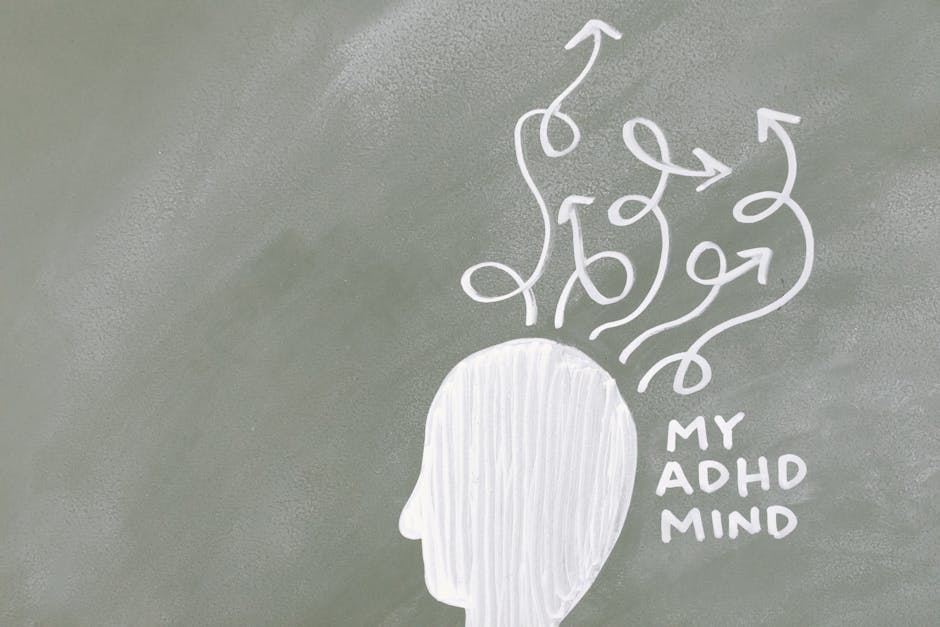
You aren't failing because you aren't trying hard enough. You are failing because your brain is a Ferrari engine running on sub-par fuel, or perhaps trying to drive on a road that wasn't designed for that level of horsepower. Take the time to understand your specific cognitive style, be rigorous about the evidence you base your health decisions on, and stop punishing yourself for having a brain that is simply wired to work at a different frequency.