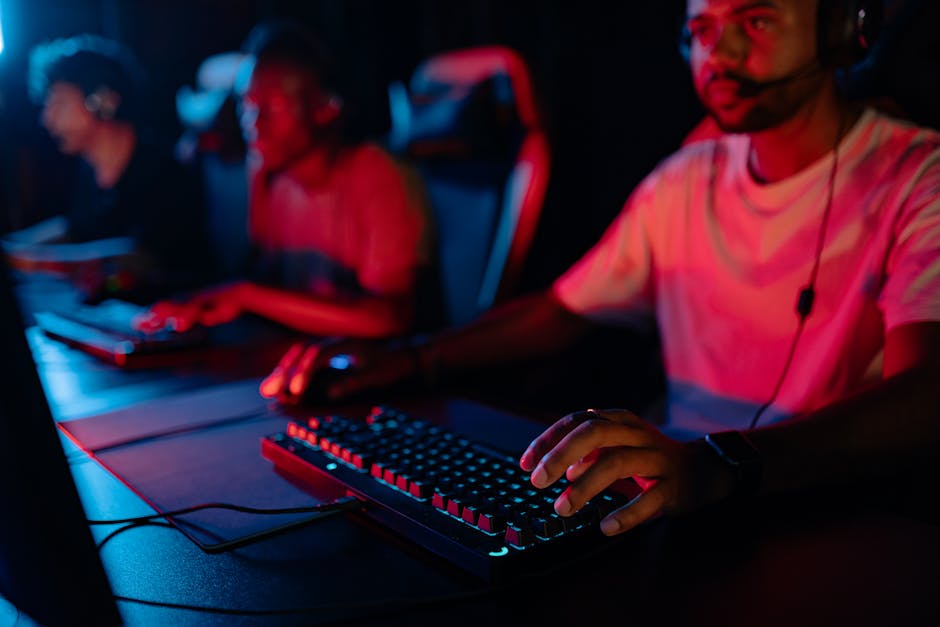
I’ve spent nine years behind the scenes of professional esports. I’ve sat in the back of cramped team houses in Berlin, hovered over keyboards during high-stakes tournament travel, and worked alongside sports psychologists who had to peel players off the floor after a double-digit loss. If there is one thing I have learned, it is that there is no faster way to destroy a roster's potential than the "grind culture" that glorifies 3:00 AM practice sessions.
You know the feeling. It’s the final hour of a grueling late-night practice. Your comms are getting shorter, the VOD review has turned into a blame game, and your reaction time feels like it’s being throttled by a dial-up modem. You miss the rotation. You fumble the utility. You make a play that you know, logically, is a mistake—but you do it anyway. When I hear players tell me, "I just need to focus harder," I stop them immediately. It isn't a lack of discipline. It’s biology, and it’s time we started treating it that way.
etruesports.comThe Neuroscience of the "Sloppy Hour"
When you are deep into a session, you are experiencing cognitive fatigue. This isn't just "being tired." It is a measurable degradation of the prefrontal cortex—the part of your brain responsible for executive function, impulse control, and strategic planning.
Think of your cognitive capacity as a shared resource. Every decision you make during a game—where to position, when to rotate, which ability to use—draws from that bucket. As the hours tick past midnight, that bucket isn't just empty; it’s being forced to run on fumes. Research consistently shows that as cognitive fatigue sets in, our brain shifts from "deliberative mode" to "impulsive mode." You stop playing the game you practiced and start playing the game your lizard brain demands: fast, reckless, and reactive.
The "Sleep Myth" List
I keep a running tally of the nonsense I hear from coaches and players who refuse to look at the data. If you hear these in your discord, you’re in trouble:
- "I perform better when I'm tired because I'm more focused." (No, you're just experiencing heightened alertness from cortisol—your body is in a stress state, not a performance state.) "Sleep is for losers; the grind never stops." (If your brain isn't sleeping, it isn't consolidating what you learned during today’s scrims. You are literally wasting your training time.) "I can catch up on sleep on the weekend." (Biology doesn't work on a credit system. Once the damage is done, it's done.)
Burnout Isn't a Discipline Issue
There is a dangerous narrative in gaming that labels burnout as a "lack of discipline" or a sign that a player "doesn't want it bad enough." Let me be clear: that is absolute garbage. Burnout is a systematic failure of recovery. If you ran a marathon every single day without adequate fuel, hydration, or sleep, your legs would give out. Why do we expect the brain to be any different?
When a team forces late-night practice sessions, they aren't just making players tired; they are degrading the team’s collective IQ. You lose the ability to analyze your mistakes properly, which leads to redundant, circular arguments in VOD reviews. You stop innovating. You start mimicking your own bad habits because you lack the mental bandwidth to adjust your playstyle in real-time.
Teams that glorify the all-nighter are usually the teams that crumble in the final map of a best-of-five. They aren't losing because they're less skilled; they're losing because their cognitive load management was nonexistent.
Data Comparison: Optimal Training vs. "The Grind"
I’ve put together a quick look at how these two approaches actually pan out in practice. Take a look at the trade-offs below:
Metric Optimized Practice "The Grind" (Late-Night) Decision Quality High; calculated and deliberate Low; reactive and impulsive Emotional Stability Managed; communication stays calm Volatile; tilt-prone and aggressive Learning Retention High; brain consolidates tactics Minimal; fatigue prevents encoding Reaction Time Baseline/Peak Significant degradation (15-20% drop)Sleep Quality and Reaction Time: The Unseen Variable
Let’s talk about sleep deprivation. It is the silent killer of esports careers. When you stay up until 4:00 AM, you are essentially playing in a state of mild intoxication. Studies have shown that being awake for 17–19 hours produces performance deficits in reaction time and cognitive processing equivalent to a blood alcohol concentration of 0.05%.
In a high-level shooter or MOBA, where a millisecond is the difference between an entry frag and a respawn screen, you are essentially choosing to play with a massive handicap. If you went to a LAN tournament and saw a player drinking a few beers before a match, you’d assume they were throwing. Why is it different when you stay up all night to "grind" ranked queues?
Recovery as Training
Recovery is not "time off." Recovery is a part of the training cycle. If you don't sleep, your body cannot repair the micro-tears in your muscles (from wrist and posture strain) and your brain cannot cement the tactical patterns you spent the last six hours trying to build. You are essentially hitting "save" on a document and then turning off the power before the computer finishes the write-cycle.
When I worked with our team’s strength coach, we mandated "hard stops." No matter where the team was, no matter how heated the debate, at 11:30 PM, the servers were closed. The first week was hell. Players complained, coaches were nervous, and the "grind culture" die-hards called us soft. But by the second week, the team’s reaction times during the 2:00 PM scrim blocks had actually improved, and our win-rate in late-game scenarios skyrocketed.
What Changes on Monday?
I say this in every wellness talk I give: I don't care how inspired you feel reading this right now. Inspiration is cheap. What matters is the systems you put in place when the hype dies down. So, I’m asking you: What changes on Monday?
If you want to stop the late-night slide, you need to implement a "buffer zone" before sleep. You cannot go from intense, high-adrenaline competition to dead sleep in five minutes. It’s like trying to slam on the brakes in a sports car at 150mph—you’re going to skid.
3 Steps to End the Late-Night Spillover
The 30-Minute Wind-Down: Stop playing 30 minutes before your actual sleep time. Use this time to write down three things you learned during the day’s practice. Externalizing these thoughts helps clear your "mental RAM," so you aren't lying in bed trying to solve a rotation problem that occurred four hours ago. Strict "Scrim Cut-Off": If you're a team, set a hard end time. If you're solo queuing, set a "last lobby" alarm. If you haven't started your final game by 11:00 PM, you don't start one. Period. Optimize the Environment: Stop using your desk as your lounge. If you eat, sleep, and play in the same chair, your brain will never learn how to switch off. Keep your play area for play, and your rest area for rest.Reframing the Grind
The industry is slowly waking up. The teams that treat their players like human beings instead of keyboards with pulse-sensors are winning. They have longer windows of peak performance, fewer internal roster conflicts, and, most importantly, they aren't burning out by age 22.
Stop romanticizing the exhaustion. Stop wearing your lack of sleep like a badge of honor. It isn't a badge; it's a hole in your hull. You want to be a better player? Start by respecting the machine you play on: your brain. It’s the only piece of hardware you can’t replace when it breaks.

So, we’ve covered the why and the what. Now, look at your calendar. Look at your sleep schedule. Look at your match history at 1:00 AM versus 4:00 AM. What changes on Monday?